
Direct booking, Airbnb, or Booking: which option is best value?
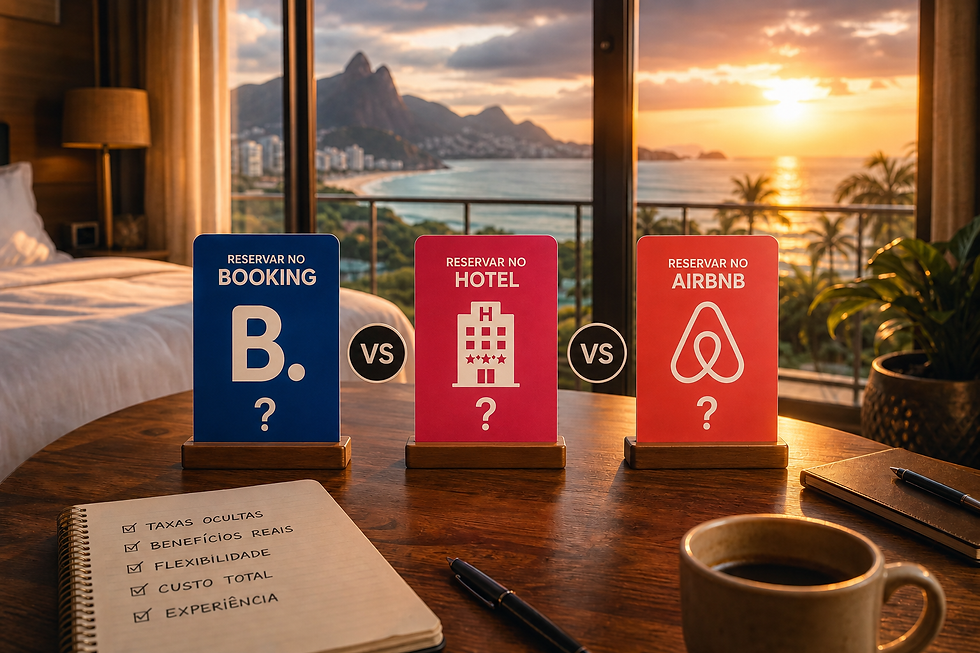
You open Booking.com, search for a hotel in Ubatuba, and find a daily rate of R$ 420. You access the hotel's website and see R$ 400. On Airbnb, an apartment appears to be priced at R$ 390. What is the real price? Neither of them, necessarily. The number that appears on the screen is rarely what you will ultimately pay.
Is it worth booking directly with the hotel instead of using Booking or Airbnb? The difference between the channels goes far beyond the advertised price. It involves fees that only appear at the final payment stage, benefits that are not included in price comparisons, and cancellation conditions that can change everything when an unforeseen event occurs. At Hotel Coquille , in Ubatuba, those who book directly through the website or WhatsApp have access to a discount of up to 12% when paying via Pix (Brazil's instant payment system), with buffet breakfast and free parking already included in the daily rate, without any additional platform fees in the final price.
In this article you will understand how to compare rates honestly, when each channel is truly worthwhile, and what to ask the hotel before finalizing your reservation.
Why the price on Booking and Airbnb is rarely the final price.
What do service and cleaning fees do to the daily rate?
For house or apartment type accommodations, Airbnb is the channel where this distortion tends to appear most strongly. The host sets a cleaning fee charged per stay, and the platform adds its service fee to the subtotal. In one of the pricing models adopted by the platform, this service fee can represent between 14.1% and 16.5% of the reservation value. The service fee appears in the details before confirmation, but may not be evident when the traveler initially only looks at the daily rate. There is also an alternative model, in which the platform charges a single fee to the host and the guest does not see a separate charge; in this case, the cost is already included in the displayed price.
In practice, a daily rate advertised at R$400 can reach R$480 or more after all fees. For short stays, of one or two nights, this difference makes the initial price completely misleading. Booking also displays prices that, depending on the listing settings, do not include mandatory taxes, which also makes comparison difficult.
The commission that the hotel pays to the platform (and who absorbs that cost)
Platforms like Booking charge hotels commissions that, according to studies in the hotel industry, usually range between 15% and 20% per booking generated ( for example, on Booking.com it's 18% ), but this percentage can vary depending on the contract and the volume of bookings for each establishment. When the hotel closes directly with the guest, this commission drops to zero. This cost exists in every booking made through an intermediary and needs to be covered somehow: either by raising the rate on the channel or by reducing the hotel's profit margin.
That's why the logic of direct discounts works. When the hotel eliminates the intermediary, part of that commission can be converted into a real discount for the guest or into benefits included in the daily rate . The guest wins and the hotel wins too, because the net revenue per booking increases even with the discount granted.
Is it worth booking directly with the hotel? See what you really get.
Discount on price and more advantageous payment methods
On average, direct bookings tend to be between 5% and 15% cheaper than those made through Booking.com, when the price includes all fees from both sides. At Hotel Coquille, the discount starts at 7% and reaches 12% for payment via Pix (Brazil's instant payment system) or cash, in the case of non-refundable rates. Those who prefer to pay in installments by credit card will also find good conditions available directly with the hotel, such as a greater number of installments and no interest charges, without depending on the rules of each platform.
Independent hotels often have more flexibility to negotiate than large chains.
A phone call or WhatsApp message before finalizing the reservation can reveal conditions that aren't advertised on any channel, such as the inclusion of breakfast, late check-out, or additional discounts for longer stays.
Extra benefits that platforms don't offer.
Besides the price, booking directly opens up advantages that aren't included in any automatic price comparison. At Hotel Coquille, for example, buffet breakfast and free parking are already included in the daily rate for those who book directly, items that, on many platforms, appear as extras charged separately. Late check-out and early check-in , when available, are also much easier to arrange directly with the hotel than through a platform.
For those who frequent hotel chains with loyalty programs, there's another important detail: points and rewards generally only accumulate when the reservation is made through the brand's official channel. Reservations made through third-party platforms may register the stay, but they usually don't earn points in the program, which represents a silent loss over time. It's worth checking the specific policy of each chain, as some allow partial credit even through intermediaries. It's also good to remember that some independent hotels have their own loyalty programs.
When does using Booking or Airbnb still make sense?
Destination discovery and initial price comparison
These platforms have real value: they're excellent for discovering options, comparing accommodation categories, and reading reviews from other guests before making any decisions. The mistake is stopping there. The smartest strategy is to use Booking or Airbnb as a starting point for your search and then access the hotel's official website to check if booking directly is cheaper overall.
In destinations where Airbnb dominates with vacation homes and apartments, the comparison with hotels doesn't always apply in the same way. In these cases, the platform may genuinely be the only way to access that type of accommodation, and the decision is based on other criteria.
Situations in which the platform offers greater perceived security.
That said, there are situations where accessing a platform is the most practical choice. Some travelers prefer to pay through the platform for the sense of security in the payment process and dispute resolution, a reasoning that makes more sense when dealing with an unknown accommodation without a consolidated history. In hotels with an established reputation, a clear official website, and identified customer service channels, direct booking is almost always the best option.
It's important to remember that consumer protection is always guaranteed by the Consumer Protection Code, regardless of the chosen channel. The practical difference is that resolving a problem directly with the hotel tends to be less bureaucratic than relying on the support of a platform with its own customer service and dispute resolution processes, although the experience may vary depending on the establishment and the situation.
How to compare rates honestly before deciding
What to check on the hotel's website and platforms
Before making any comparisons, enable the total price view on the platforms, the one that includes all fees and taxes (in the case of Airbnb), or pay attention to notes such as "+ R$ in taxes and fees," as often appears on Booking. Comparing Booking's base rate with the final price on the hotel's website is the most common mistake, and what leads most people to conclude that the platform is cheaper when it isn't.
Also check what's included in the daily rate on each channel: breakfast, parking, pet fees, and Wi-Fi may appear as extras on one platform but may already be included in the direct booking.
Compare the booking conditions (or cancellation policy) of each offer. Check, for example, the cut-off date for free cancellation on each channel, and which one makes the most sense for you.
It's worth asking: the questions that open negotiations with the hotel.
Before making any reservation, contact the hotel via WhatsApp, email, or phone. Here are some questions that make a difference:
"Do you have a lower direct rate than what's on Booking?"
"What extra benefits do you offer to those who book directly?"
"What is the cancellation policy for direct bookings?"
"Do they accept payment in installments or offer a discount for payment via Pix?"
This conversation opens the door for negotiation and, most importantly, for obtaining written confirmation of everything that is included. Keeping this record is essential should you need to claim on any warranty later.
Cancellation, refunds, and your rights as a guest.
Differences between direct policies and platform policies
Hotels that sell directly have more leeway to customize their cancellation policy and often use this as a marketing differentiator, even offering fee-free cancellation options up to a few days before check-in – something that doesn't happen with non-refundable rates displayed by platforms, where the non-refundable model is presented as a discount option.
If the cancellation comes from the hotel, and not the guest, the right to a full refund or free rescheduling exists through both channels. The difference is that resolving this without an intermediary tends to be more direct and less bureaucratic than going through a platform's support.
What does the CDC guarantee for online reservations?
Article 49 of the Consumer Protection Code guarantees the right of withdrawal for purchases made outside of a physical establishment, including reservations made online. The deadline is up to 7 days after contracting, with a full refund of the amounts paid. This right applies to both direct reservations and reservations made on digital platforms. It is important to consider, however, that suppliers may contest this right when the service usage date is very close; if in doubt, consult the Consumer Protection Agency (Procon) or seek legal advice.
Always keep your receipts. Email confirmations, screenshots of your booking, and records of your communication with the hotel or the booking platform are the documents you'll need if something goes wrong. Don't rely on your memory or a random booking number in your inbox.
Checklist for deciding where to book (and avoid regrets)
The answer to the central question of this article is straightforward: in most situations, booking directly with the hotel is more cost-effective , provided you compare the total price with all taxes included and ask about benefits before finalizing. The platform has its value as a research tool, but it is rarely the best channel to complete the booking due to price differences.
The safest approach, in practice, follows this order:
Search the platforms to discover options and read reviews;
Visit the hotel's official website and compare the total price, not the advertised rate;
Contact us directly and ask about exclusive rates, benefits, and cancellation policy;
Confirm everything in writing before paying and keep all receipts.
For those planning a trip to Ubatuba and wondering if it's worth booking directly with the hotel instead of using Booking or Airbnb, Hotel Coquille is a good practical example: located 250 meters from Praia Grande beach, with a heated pool, sauna, buffet breakfast, and free parking included in the daily rate, the hotel offers a discount of up to 12% via Pix (Brazilian instant payment system) for those who book through the official website or WhatsApp, with no platform fee added to the final price. It's worth asking before clicking "book" on any other channel.


Comments